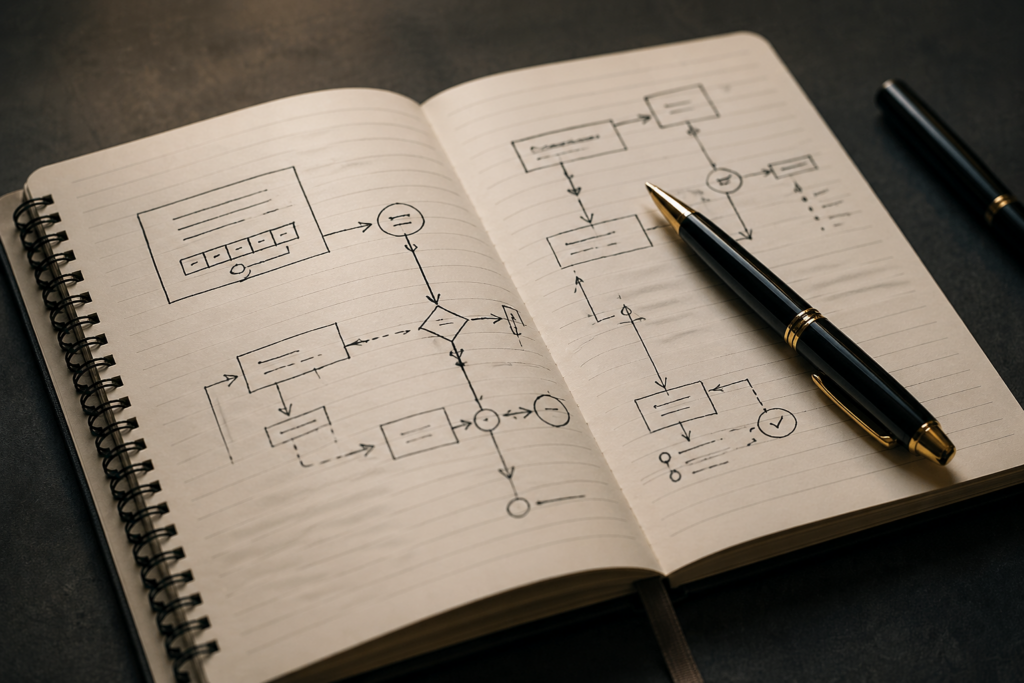
How conversations evolve into long-term, revenue-generating partnerships
Why Understanding the Deal Lifecycle Matters
Most organizations don’t struggle with opportunities—they struggle with converting opportunities into executed, revenue-generating partnerships.
The difference between inconsistent growth and scalable success comes down to one thing:
A structured, repeatable deal lifecycle
At VPRG Consulting, we help organizations design and implement deal flow systems that move prospects from initial conversation to long-term strategic partnerships.
Explore our consulting services →
What Is the Deal Lifecycle?
The deal lifecycle is the end-to-end process of converting an introduction into a fully executed and performing partnership.
It includes:
- Sourcing opportunities
- Qualifying alignment
- Structuring value
- Negotiating terms
- Executing agreements
- Managing ongoing performance
Organizations that formalize this process consistently:
- Close higher-value deals
- Reduce time to execution
- Build long-term, scalable revenue streams
The VPRG Deal Lifecycle Framework
1. Opportunity Sourcing (Generating High-Quality Deal Flow)
Everything starts with who enters your pipeline.
High-value deal flow comes from:
- Strategic introductions
- Existing network leverage
- Inbound authority (content, positioning)
- Targeted outbound outreach
Not all opportunities are equal—quality of input determines quality of output.
If your pipeline lacks consistency, it’s time to build a structured growth and acquisition strategy that ensures a steady flow of aligned opportunities.
2. Qualification & Strategic Alignment
Before investing time, top-performing organizations qualify opportunities early.
Key questions:
- Is there audience overlap?
- Is there mutual value creation potential?
- Does this align with long-term strategy?
Misaligned deals waste time, resources, and brand equity.
Clear qualification frameworks are a core component of a strong brand positioning strategy—ensuring you attract and engage the right partners.
3. Discovery & Value Mapping
This is where most deals are won—or lost.
Discovery is not about pitching—it’s about understanding:
- Their business model
- Revenue drivers
- Pain points
- Growth objectives
Your goal is to map:
Your capabilities → Their outcomes
Organizations that invest in structured discovery consistently outperform those that rely on surface-level conversations.
4. Structuring the Partnership
Once alignment is clear, the next step is designing the partnership.
Common structures include:
- Revenue sharing models
- Lead generation partnerships
- Co-branded campaigns
- Data and distribution partnerships
The best partnerships are:
- Mutually beneficial
- Clearly defined
- Scalable over time
A defined partnership strategy framework ensures deals are structured for both performance and longevity.
5. Negotiation & Alignment
Negotiation is not about “winning”—it’s about alignment and clarity.
Effective negotiation focuses on:
- Clear expectations
- Defined deliverables
- Measurable outcomes
- Risk mitigation
The strongest deals eliminate ambiguity before execution.
6. Execution & Activation
This is where deals either succeed—or stall.
Execution requires:
- Clear onboarding processes
- Defined roles and responsibilities
- Communication cadence
- Performance tracking systems
Without strong execution, even well-structured deals fail.
Organizations that invest in operational and growth systems consistently see higher partnership success rates.
7. Optimization & Long-Term Scaling
The most valuable partnerships don’t end at execution—they evolve.
High-performing organizations:
- Track performance metrics
- Optimize based on data
- Expand successful initiatives
- Build long-term strategic alignment
This is where partnerships become predictable revenue engines
Build a Scalable Deal Flow System
If your organization is relying on inconsistent deal flow or struggling to convert opportunities into executed partnerships, the solution is not more conversations—it’s better systems.
View Our Consulting Services →
Advanced Strategy: Turning Deal Flow Into a Growth Engine
Top organizations don’t just close deals—they build systems that:
- Continuously generate opportunities
- Filter for high-value alignment
- Convert at higher rates
- Scale successful partnerships
This transforms deal flow from reactive to predictable and scalable.
Common Breakdowns in the Deal Lifecycle
Organizations often lose deals due to:
- Weak or inconsistent sourcing
- Poor qualification processes
- Lack of structured discovery
- Unclear partnership structures
- Inefficient execution systems
- No performance tracking or optimization
Each breakdown reduces conversion and limits growth potential.
Final Perspective
Deals don’t close themselves—and they don’t scale without structure.
The organizations that consistently win are those that:
- Control their pipeline
- Qualify strategically
- Structure value effectively
- Execute with precision
- Optimize continuously
When your deal lifecycle is systemized, growth becomes predictable.
Ready to Build a High-Performance Deal Flow System?
If you’re looking to improve conversion rates, structure better partnerships, and scale revenue through strategic deal flow: